Phases
Operational guides for each phase.
The Framework is the operational layer of Problem-Driven AI. While the methodology explains what each phase means and why it matters, the Framework tells you exactly how to execute it: step-by-step processes, artifact templates, gate reviews, anti-patterns to avoid, and effort estimates. It is the bridge between understanding the methodology and applying it in a real project.
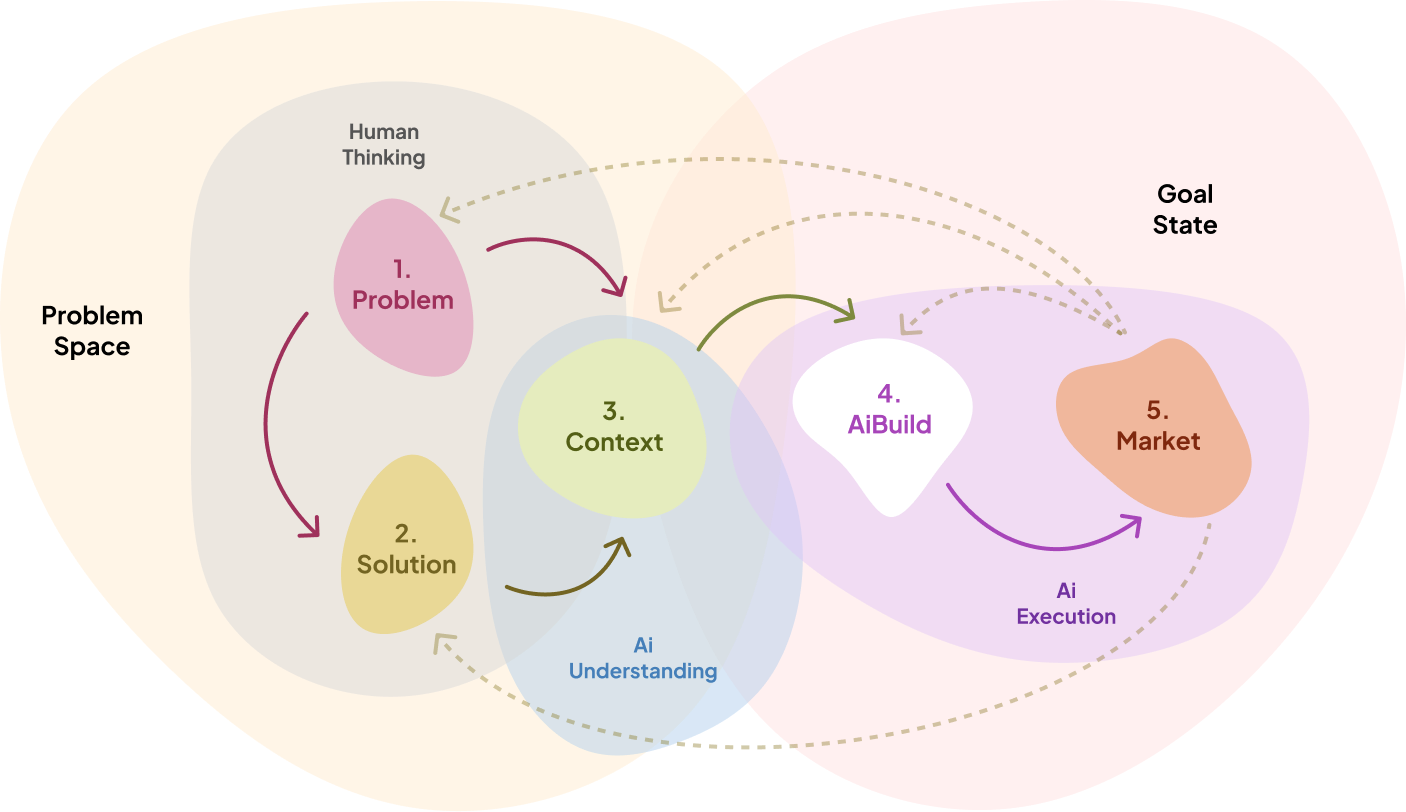
Each card below links to the operational guide for one phase. These guides complement the conceptual content found in the Methodology section. Where Methodology answers what is this phase? and why does it exist?, the Framework answers how do I execute it?, what artifacts do I produce?, and how do I know I'm done?. Both layers cover the same five phases — start with Methodology to understand, move to Framework to execute.
 1. Problem Phase
The team conducts interviews, synthesizes findings, and drafts a Problem Statement validated with real users and with the person who has the authority to solve it.
 2. Solution Phase
The team generates options, evaluates them with explicit criteria, and reaches a real agreement on what to build. The result is a Solution Brief with no unresolved critical assumptions.
 3. Context Phase
The team defines the project Rules, each Agent’s roles, and concrete tasks in Story Files. Everything must be self-contained and traceable before building.
 4. AI Build Phase
The team builds following Story Files and documents every unforeseen decision. The phase ends when technical and non-technical stakeholders recognize the result as faithful to the original problem.
 5. Market Phase
The team captures market signals, interprets them, and updates the context in each cycle. It has no end: it operates continuously while the product is active.